Long hours, demanding caseloads, and the emotional toll of supporting clients can make it difficult to maintain a healthy work-life balance. Here are some examples of the toll that this can have:
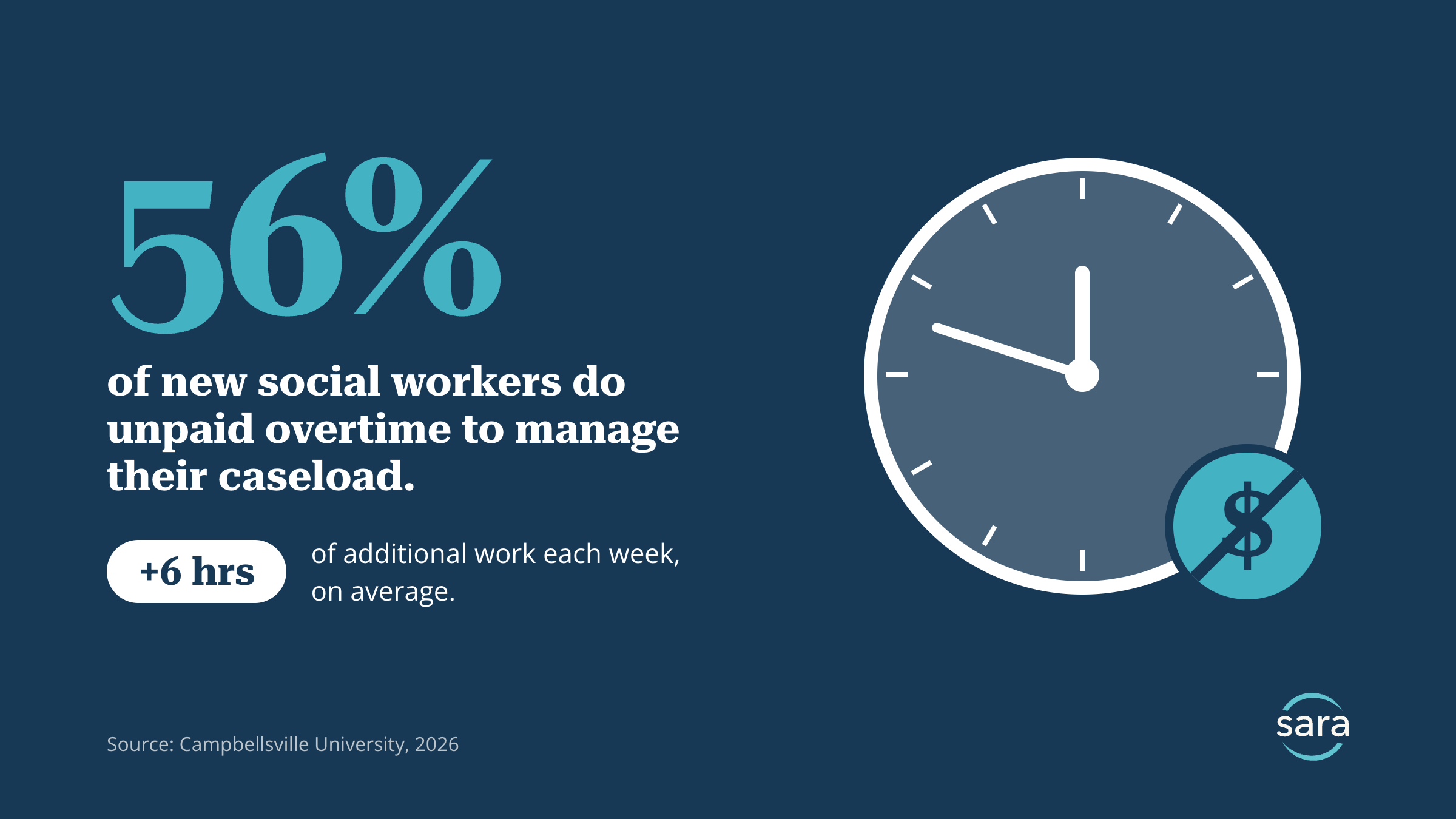
56% of new social workers do unpaid overtime to manage their caseload – 6 additional hours on average – each week. (Campbellsville University, 2026)
56% of case managers report experiencing compassion fatigue in their role. (University of the Pacific)
Approximately 30% of licensed US social workers at the master’s and clinical practice levels reported having a mental health condition. While this is not necessarily due to their work, it is still an interesting correlation to note. (ASWB, 2025)
In 2025, 58% of case management social workers reported experiencing high stress. In 2026, this dropped to 43%. (Agents of Change, 2026)
67% of hospice workers reported high stress, followed by 60% of addiction and substance misuse social workers. (Agents of Change, 2026)
Compassion fatigue and stress can make already demanding caseloads even harder to manage and unfortunately lead to higher turnover for some organizations.
When burnout and job dissatisfaction persist, agencies risk losing experienced staff. Vacancies can then increase pressure on remaining caseworkers, who must balance their existing responsibilities with additional clients and administrative tasks.
More than one-third of vocational rehabilitation counselors intended to look for another position within one year, while approximately half expected to seek another position within five years. (Rehabilitation Counseling Bulletin, 2023)
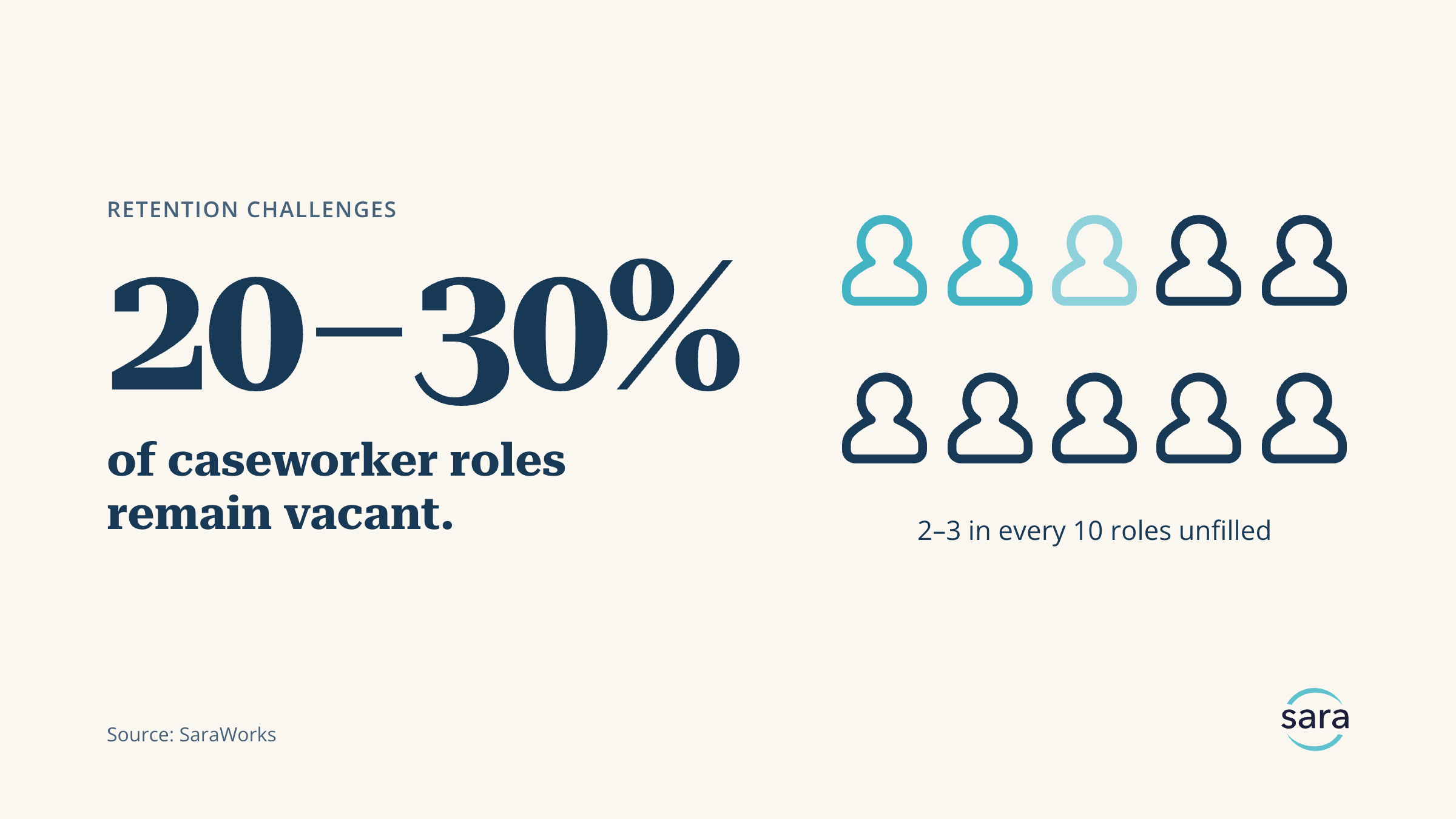
According to SaraWorks data, upwards of 20-30% of caseworker roles remain vacant. (SaraWorks)
37% of surveyed social workers said they were somewhat or very likely to change jobs in the next 12 months. (Agents of Change, 2026)
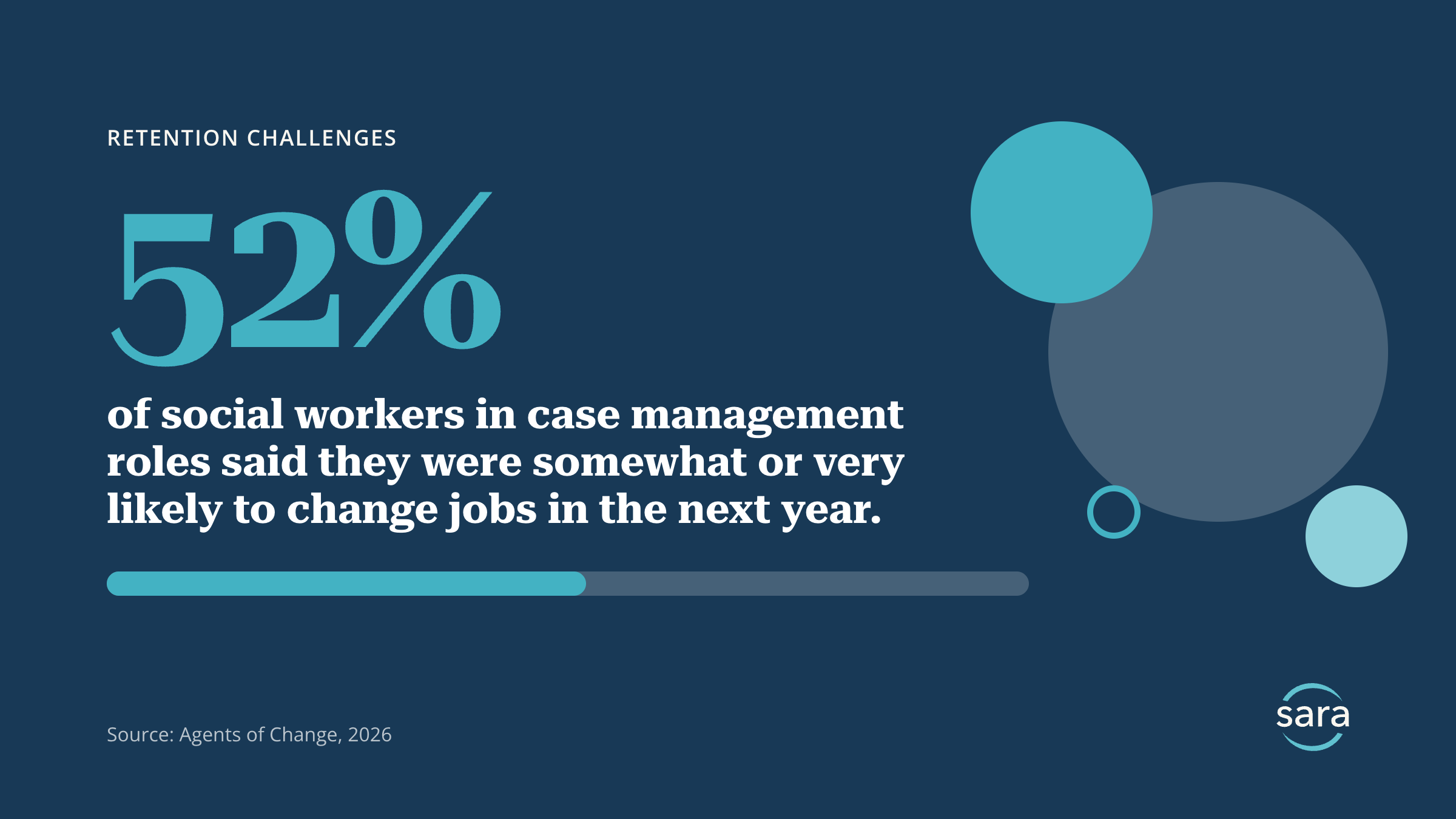
52% of social workers in case management roles said they were somewhat or very likely to change jobs in the next year. (Agents of Change, 2026)
Among child welfare workers who reported increased turnover, 74.9% identified job burnout and stress as reasons employees left their units. (US Administration for Children and Families, 2025)
Turnover creates challenges beyond the loss of valuable program knowledge and caseload redistribution. For clients, staffing disruptions can mean changes in their assigned caseworker, longer response times, and interruptions in the support they rely on.
Burnout doesn’t happen in isolation, and it isn’t the fault of human services workers. In fact, it is often workplace conditions that can play a big part in ensuring employee well-being.
Among respondents planning to change jobs, 58% wanted a higher salary, 17% wanted a less stressful role, and 11% wanted more flexible working hours. (Agents of Change, 2026)
46.5% of surveyed Kentucky vocational rehabilitation counselors managed between 101 and 150 cases, while approximately 25% managed more than 150. (Kentucky OVR Comprehensive Statewide Needs Assessment, 2024)
83% of social work practitioners surveyed in South Carolina identified organizational factors as contributors to burnout. (Social Work, 2024)
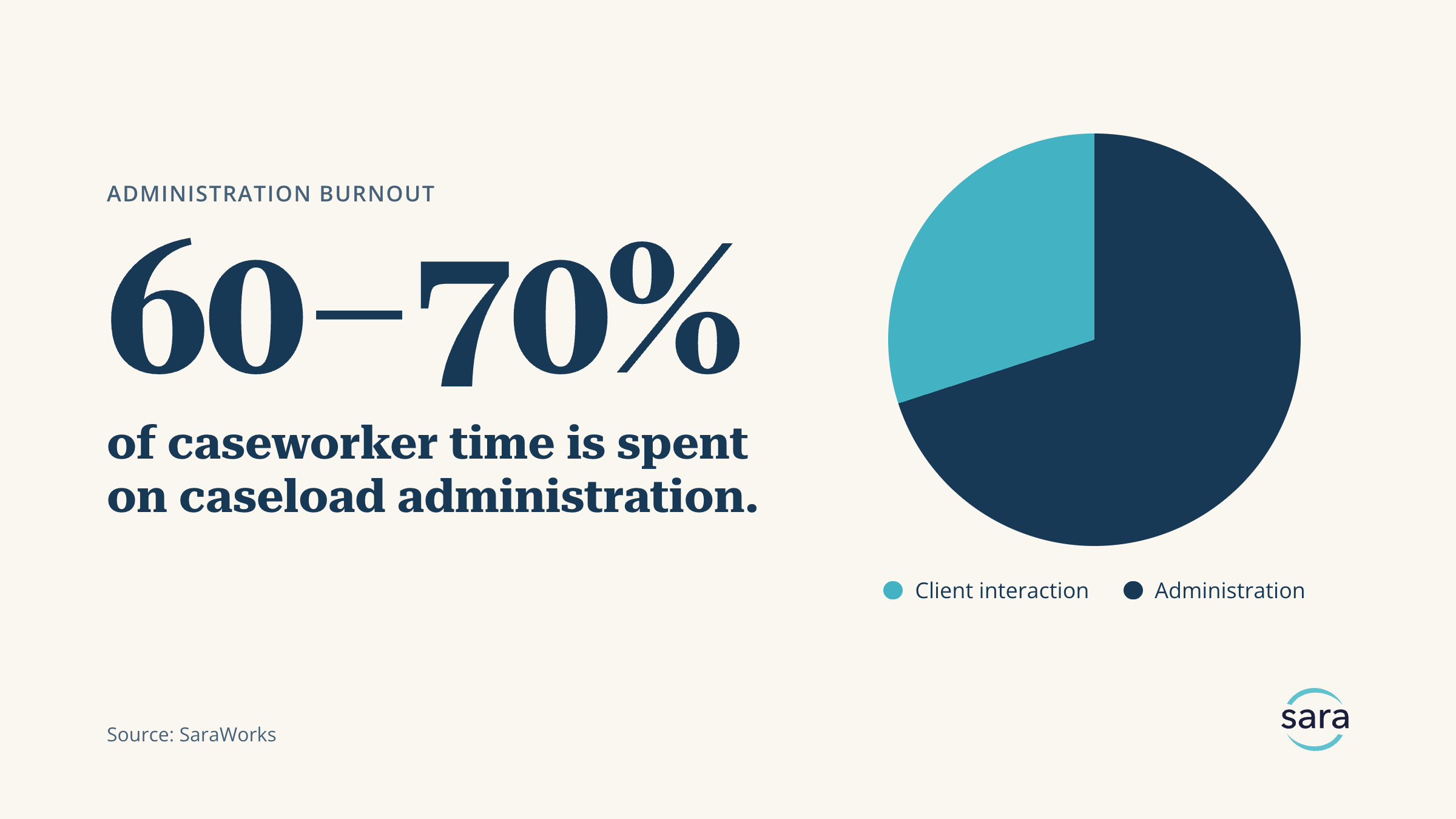
60-70% of caseworker time is spent on caseload administration, rather than the human interactions that contribute to positive outcomes. (SaraWorks)
Researchers have found that supervision quality was associated with differences in burnout scores. Yet 26.5% of vocational rehabilitation counselors in a two-state US study reported receiving inadequate supervision. (Rehabilitation Counseling Bulletin, 2023)
Of new social workers who lack adequate supervision, 88% contemplate exiting their role. (Campbellsville University, 2026)
35% of new social workers believe that future curriculums would benefit from greater input in caseload and time management. (Campbellsville University, 2026)
Burnout can affect social workers at different stages of their careers. At the beginning, burnout may be linked to inadequate training or simply a lack of experience. As time goes on, caseworkers may experience burnout and compassion fatigue as a result of vicarious trauma (distressing empathy response from listening to trauma stories).
Workplace stressors are not the entire picture. Another way to address burnout is to look at the positive elements that contribute to job satisfaction. Supportive supervision, manageable workloads, and access to the right tools can all influence how caseworkers feel about their jobs and their ability to support clients.
81.05% of US clinical social workers reported satisfaction with their supervision, while 8.34% were dissatisfied. (ASWB, 2025)
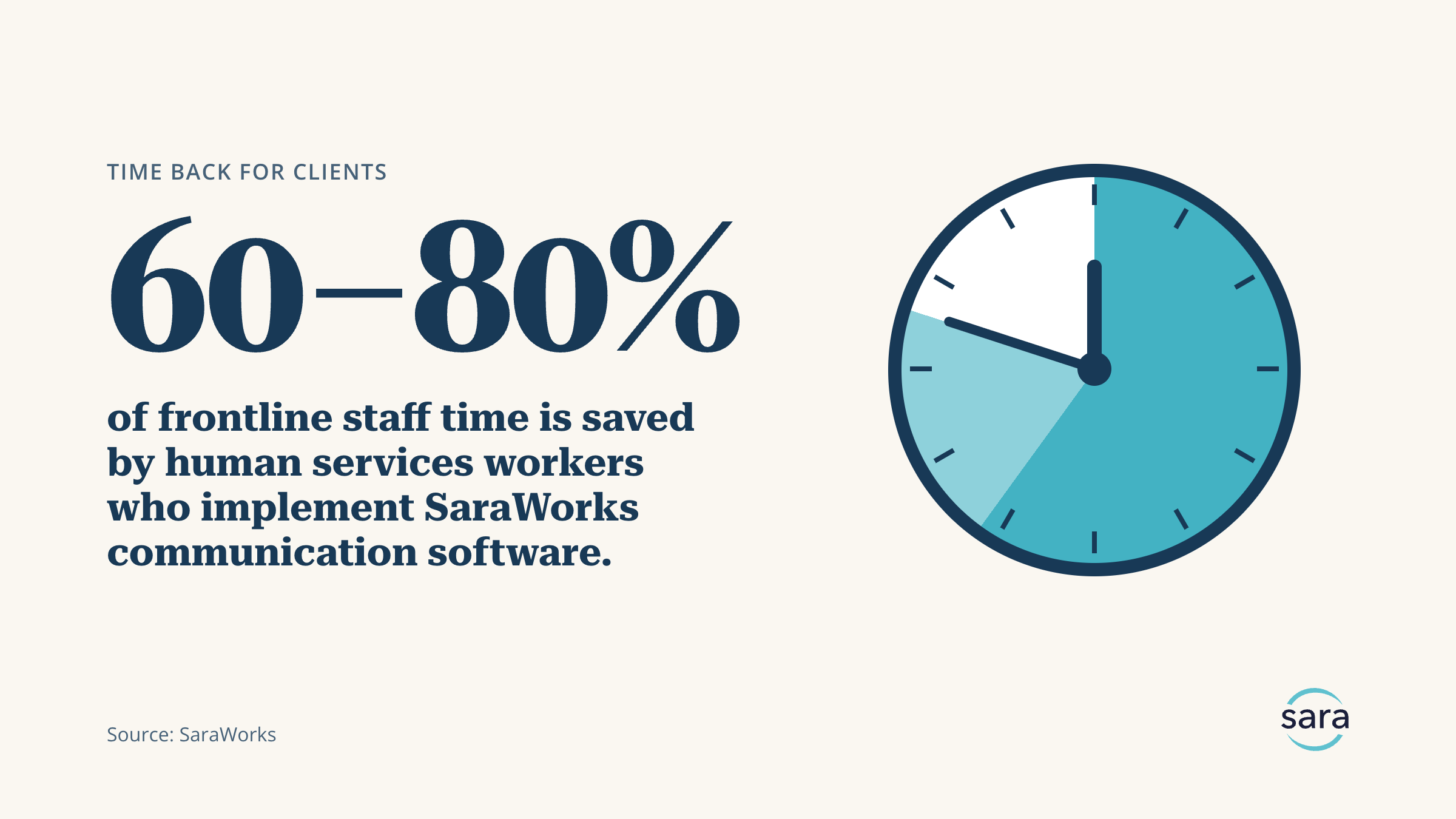
60-80% of frontline staff time is saved by human services workers who implement SaraWorks communication software. (SaraWorks)
72% of new social workers say they have benefited from peer support. (Campbellsville University, 2026)
Job satisfaction and professional identity typically require a sense of achievement—the feeling that you are making a positive difference for clients. For vocational rehabilitation counselors and workforce development caseworkers, having sufficient time to support clients and use their professional skills can be an important part of finding workplace fulfillment.